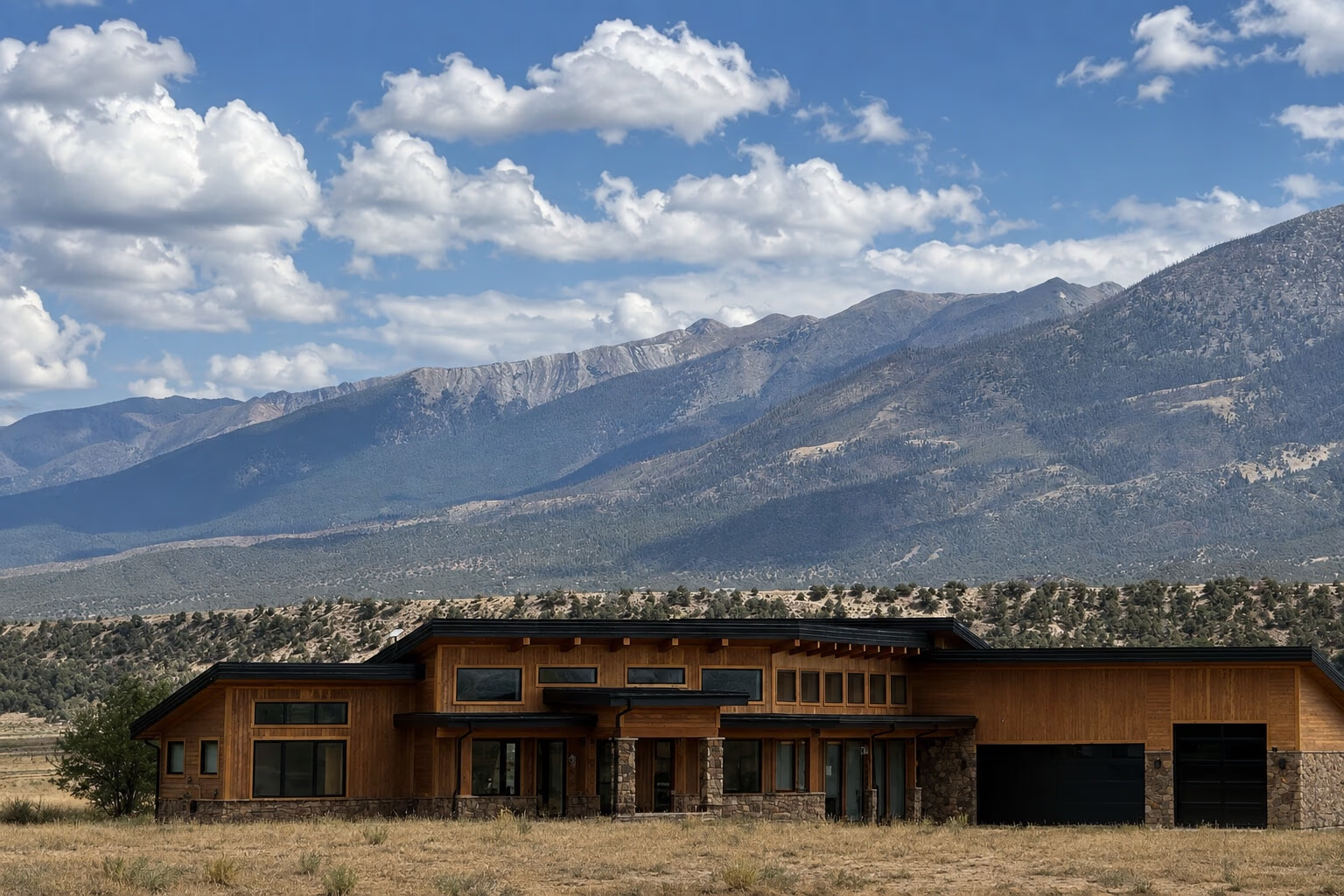
Building science and architecture
High-performance homes designed for Colorado’s mountain climate.
Comfort, efficiency, resilience, and beauty developed together.
How does building science shape a mountain home?
High-performance residential design connects the home’s form with how it feels and functions. The site, enclosure, and building systems are developed together, with comfort and durability informing the design from the start.
Building orientation, form, glazing, shading, insulation continuity, air control, moisture management, ventilation, and mechanical coordination all affect comfort and durability.
Salida Plan Studio combines residential design with practical building-science knowledge to develop homes suited to large temperature swings, intense sun, wind, snow, dry conditions, and wildfire considerations. Performance goals are coordinated with views, proportions, materials, indoor-outdoor connections, and the way the home will actually be built.
The result is architecture in which comfort, efficiency, resilience, and beauty support one another from concept through construction documentation.
What does Certified Passive House Designer expertise add?
Michael Cozart is a Certified Passive House Designer through the Passive House Institute. Passive House residential design considers insulation, airtightness, thermal-bridge reduction, windows, and ventilation as a connected system. Those principles inform planning and detailing whether the owner pursues building certification or a tailored high-performance scope.
For owners pursuing building certification, analysis, documentation, and verification are developed around that goal. Other projects use Passive House principles to support a tailored approach to comfort and energy performance.
How are climate, elevation, and systems coordinated?
Site-specific sun, wind, temperature, snow, and exposure affect the enclosure and architectural planning. At mountain elevations, equipment suitability and manufacturer requirements also matter. Residential load calculations, ventilation planning, and mechanical coordination should reflect the actual home and its enclosure rather than floor area alone.
Choosing a designer for a high-performance home
Ask how a designer connects building science with the spaces, views, and materials you want. Our guide to choosing a mountain-home designer explores design experience, technical documentation, and the working relationship behind a successful home.
Relevant work